DuckDice Deposits: Match the Coin, Network and Address
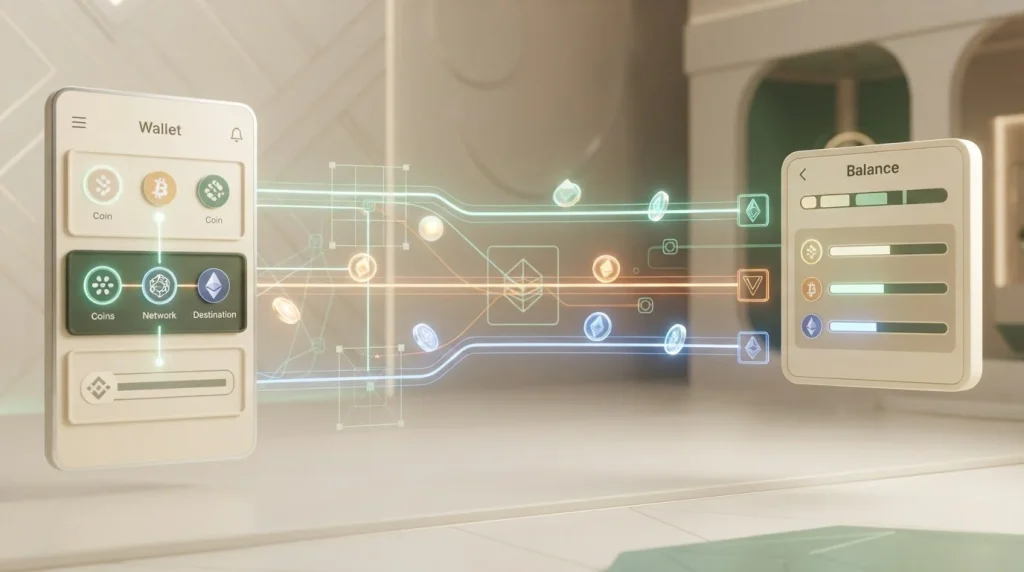
Table of Contents
- A DuckDice deposit has three details to match before sending
- A short deposit routine removes most avoidable network errors
- DuckDice does not state an added platform fee, but the blockchain still charges for movement
- Read the cashier differently for native coins and multi-chain tokens
- Most deposit problems begin before the transaction reaches DuckDice
- DuckDice also has a faucet, but it is not a cash-deposit method
- DuckDice deposit FAQ
- Treat the current DuckDice cashier as the final transfer instruction
Section element
Funding a crypto balance
DuckDice supports a broad range of cryptocurrencies across multiple chains. Minimum deposits depend on the selected currency and network, so the amount, asset and network shown in the cashier should all be checked before sending.
Section element
BTC, ETH, USDT, USDC, DOGE, LTC, XRP, ADA, TRX, BNB, SOL, XMR, SHIB, MATIC/POL, BCH and AVAX are among the assets associated with DuckDice. Because the cashier is multi-chain, choosing the coin is only one part of the transfer.
- AssetsBroad multi-crypto support
- NetworksMulti-chain cashier
- Platform minimumDepends on currency and network
- Platform feeNo added payment fee stated
The parent DuckDice payments guide compares deposits with withdrawals. For cashing out after play, the withdrawal guide covers minimums, stated processing speed and verification triggers.
A DuckDice deposit has three details to match before sending
A crypto transfer can look simple because the cashier provides an address, but the address belongs to a particular asset-and-network combination. A wallet may show the same token symbol on more than one chain. Stablecoins make this especially visible: USDT and USDC can travel over different networks, and the route chosen in the sender must match the route selected in the DuckDice cashier.
1. Asset
Start with the exact coin or token shown in the cashier. BTC, ETH, stablecoins and altcoins are different balances even when their fiat value happens to be similar.
2. Network
Select the blockchain route shown for that asset. DuckDice supports multiple blockchain routes, so a familiar ticker does not imply one universal route.
3. Address
Copy the deposit address only after the asset and network have been selected. The address should then be checked against the withdrawal screen in the sending wallet or exchange.
The safest mental model is to treat the ticker and network as one combined instruction. “USDT” is incomplete by itself; “USDT on the network currently shown in the cashier” is the information that actually defines the route.
A short deposit routine removes most avoidable network errors
DuckDice states that the minimum deposit depends on the selected currency and network. Many currencies can have no minimum, while others have specific thresholds. The sending wallet or exchange may also impose its own minimum or fee.
- Open the DuckDice cashier and choose the asset you intend to send.
- Choose the network shown for that asset before copying an address.
- Open the sending wallet or exchange and select the same asset and the same network.
- Compare the first and last characters of the destination address after pasting it. This catches some clipboard mistakes without relying on memory.
- Review the sending fee and any minimum shown by the wallet or exchange before confirming.
- After broadcasting the transfer, keep the transaction identifier until the balance appears.
This routine separates three independent questions: whether DuckDice supports the asset, whether both sides use the same blockchain, and whether the amount meets the minimums shown by DuckDice and the sending service.
DuckDice does not state an added platform fee, but the blockchain still charges for movement
A crypto deposit can still involve a blockchain or sending-service fee. That cost depends on the selected network and the service broadcasting the transaction, so it should be checked before the transfer is confirmed.
- DuckDice deposit threshold
- Depends on the selected currency and network.
- Blockchain fee
- Paid for moving the asset over the selected network.
- Exchange withdrawal fee
- A sending exchange can apply its own withdrawal charge or minimum independently of DuckDice.
- Crypto price movement
- The market value of the asset can change while the coin amount in the wallet stays the same.
These costs should not be blended into one “deposit fee.” If a wallet deducts a network charge, that does not mean DuckDice has added a cashier fee. Conversely, a zero-fee platform policy does not mean the transfer itself is costless.
When comparing routes, the useful figure is the amount expected to arrive after the sending-side and network deductions shown before confirmation. That comparison is most useful when two supported networks carry the same token and the sending wallet displays different fees.
Read the cashier differently for native coins and multi-chain tokens
DuckDice supports both native blockchain assets and tokens that can exist on several chains. The table below avoids inventing a fixed route where one is not established and instead shows what needs to be confirmed at the moment of transfer.
| Asset group | Examples | Network cue | What to verify before sending |
|---|---|---|---|
| Native major coins | BTC, LTC, DOGE, XRP, ADA, TRX, BNB, SOL, XMR, BCH, AVAX | Use the route shown for the selected asset | Confirm that the sending wallet uses the same blockchain route and address format displayed in the cashier. |
| Ethereum asset | ETH | ERC20 / Ethereum route when shown | Check that the wallet is not preparing the transfer on a different supported chain just because it can hold the same asset. |
| Stablecoins | USDT, USDC | ERC20, TRC20 and other cashier-supported routes | Match the token and network together; stablecoin tickers alone do not define the destination chain. |
| Multi-chain token | MATIC/POL and other supported tokens | Follow the current payment dialog | Use the network label shown at the time of deposit rather than assuming a route from the token name. |
The practical benefit of this grouping is that it changes what deserves attention. With a native coin, the main job is usually address accuracy and the sending fee. With a multi-chain token, network selection becomes an additional failure point that needs its own check.
Most deposit problems begin before the transaction reaches DuckDice
Checks that reduce avoidable friction
- Match asset and network on both sides before copying the address.
- Review the sender’s fee and minimum before confirming the transfer.
- Keep the transaction identifier until the balance is credited.
- Reopen the cashier for each new route instead of relying on an old address.
Errors that change the problem
- A wrong address sends the asset to a different destination.
- A wrong network can send a supported token over a route the chosen cashier address does not expect.
- A fee that is large relative to a small transfer can make a technically valid deposit uneconomic.
- Price movement can change the fiat value of the deposited crypto after it arrives.
The key distinction is between a transfer that is delayed and a transfer that is misrouted. Waiting for network confirmation is normal blockchain behavior. Sending the wrong asset-network combination is a routing error, and waiting longer does not correct it.
DuckDice also has a faucet, but it is not a cash-deposit method
DuckDice has announced that the faucet is being phased out. If it is still available in an account, it remains separate from crypto deposits and does not change deposit minimums, blockchain fees or wallet-routing requirements.
That separation matters because a faucet balance and a crypto deposit answer different questions. A deposit moves an external asset on-chain into the casino. A faucet begins inside the site and therefore does not require the same address-and-network workflow. The faucet, rakeback and changing promotion structure are covered in the DuckDice bonus guide rather than treating those mechanics as payment rails.
DuckDice deposit FAQ
Does DuckDice have a minimum deposit?
DuckDice states that minimum deposits depend on the selected currency and network. Many currencies can have no minimum, while others have specific thresholds, and the sending service can impose additional limits.
Which cryptocurrencies can I deposit at DuckDice?
DuckDice supports a broad range including BTC, ETH, USDT, USDC, DOGE, LTC, XRP, ADA, TRX, BNB, SOL, XMR, SHIB, MATIC/POL, BCH and AVAX, among others. The current cashier is the best place to confirm the exact asset and network pair before sending.
Does DuckDice charge a deposit fee?
The sender can pay a blockchain or wallet-service fee for the selected deposit route; the amount depends on the network and sending service.
Can I use the DuckDice faucet instead of making a deposit?
DuckDice has announced a phase-out of the faucet. If faucet access remains available, it is a separate free-play feature rather than part of the deposit workflow.
Treat the current DuckDice cashier as the final transfer instruction
The deposit model is straightforward once the parts are separated: DuckDice supports a broad range of crypto, while the minimum depends on the selected currency and network. The variable details live in the transfer route itself. Match the coin, network and address, review the sending-side fee, and use the cashier shown for that transaction instead of relying on a previous route.